
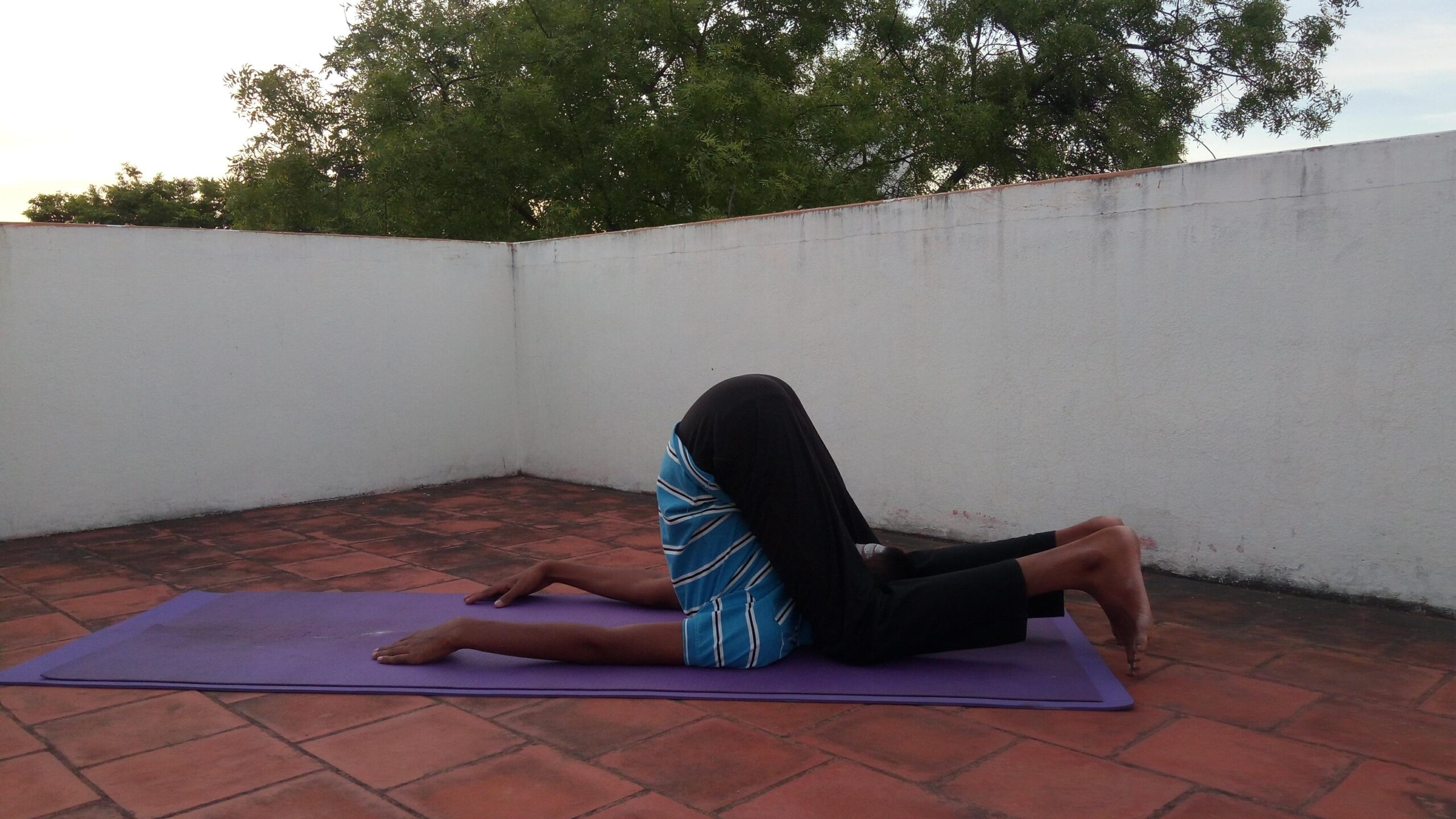
yOgA is not about twisting the body, but straightening the mind – svAmi CinmayAnandA
I feel fortunate that we have a cohort of practitioners in yagnyashALA who have been practicing yOgA, not merely with the goal of physical fitness or relieving oneself of some pain/ disease, but more as a way of practicing to observe oneself. When I deepen this practice of paying attention, I discover ways of dealing with health issues without getting consumed by them, and eventually surprise myself in having got relieved from them. Thus, in this practice, health is a bye-product for sure, but not the primary objective.
The real practice thus is “dhyAnA” – learning to ‘pay attention’. Developing ‘attentiveness’ in what I do is the practice of yOgA. As our AsAn shrI raghu anantanArAyaNan often quotes his teacher yOgAcAryA shrI kriShnamAcAryA – “paying attention to one’s breath is prANAyAmA; paying attention to one’s body is AsanA“.
Thus, the practice of yOgA in yagnyashALA involves both AsanA-prANAyAmA and svAdhyAya. svAdhyAya in our context is learning to observe one’s own behaviour (my actions and inactions), as well as the inner triggers – the seeds of manifest behaviors. svAdhyAya without AsanA-prANAyAmA can become a mere intellectual engagement; and AsanA-prANAyAmA without relevant svAdhyAya is merely a physical exercise with limited impact.
Another key idea that I have learnt in the practice of yOgA over the past many years, and especially from my AsAn, is enshrined in the samskritam phrase aprAptasya prAptih (अप्राप्तस्य प्राप्तिः) – the attainment of that which is not yet attained. The practice of yOgA is about striving to be a better version of myself. Thus, the practice of AsanA is not about learning a certain number of “postures”, but about engaging in the practice of touching the limits of my bodily capacities and stretching that limit a little everyday. Here, one doesn’t start from an ideal posture that has to be mastered, but rather start from what my body today allows me to do, and stretching that limit a little. Over a period of time, I often gets surprised as to what I could do. Though it often feels magical when I am able to do what I could not do at some time in the past, it isn’t really any magic, but the outcome of consistently pushing my limits, a little at a time. As a corollary, the practice essentially is personal, even though it is done in a group setting.
What are the components of this practice at yagnyashALA?
- Facilitated Group Practice of AsanA-prANAyAmA – Typically once or twice a week, one hour sessions
- Regular Personal practice of AsanA-prANAyAmA on one’s own based on what is learnt/ suggested/ prescribed in the weekly group practice sessions (this can be done with the group as well, to take support from others in the consistency of the practice)
- Group svAdhyAyA sessions – Typically, once a fortnight, 90 – 120 minutes sessions
- Regular personal practice of journalling one’s reflections
- 1-on-1 chats/ calls/ reflective dialogues – as required, as required by the context
Responses