
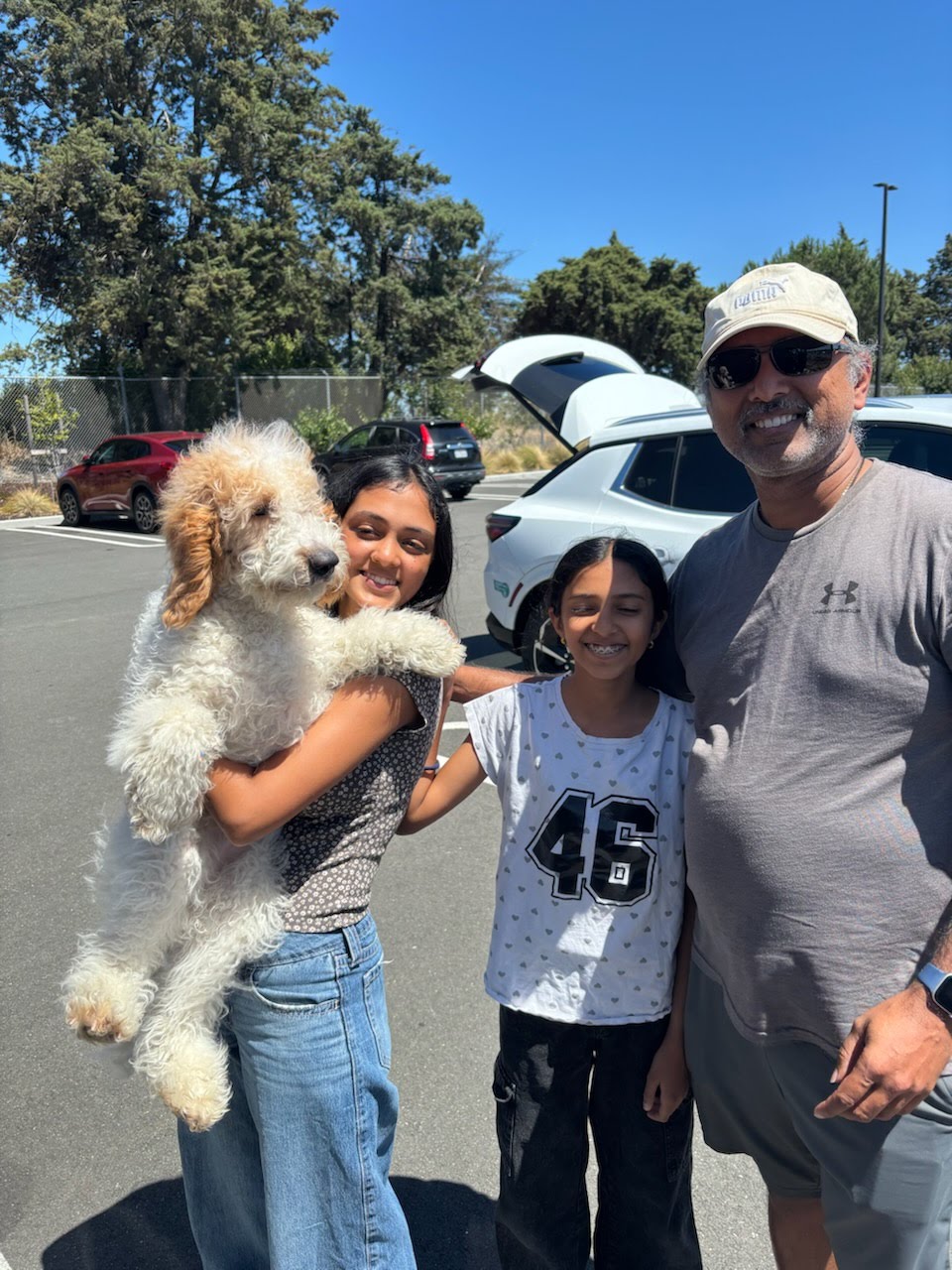
For many years, having a dog at home was a strict no for me and my wife.
My elder kid had asked for one many years ago and there wasn’t much discussion then. During COVID, we did experiment with a small hamster, which lived with us for about 2 years. As high school became busier, her interest in pets also faded.
Years later, my younger kid started asking for a puppy. My wife and I were not interested. In fact, this time we did not even want another hamster.
But after my elder kid left for college, the younger one became very persistent. Over almost a year, there was research, presentations to us and many discussions about getting a puppy.
Some of our resistance came from our upbringing. My wife and I grew up in traditional South Indian households where dogs and cats were not kept as pets inside the house. Our parents had their own inhibitions too, and we knew having a puppy at home would be an adjustment for them when they stayed with us.
I was comfortable around dogs and had walked a neighbor’s dog as a child and played with friends’ dogs in recent years. But having one living and running around inside my own home was still very different. My wife had her own concerns, especially around jumping, nipping and whether she would be able to handle a dog.
There were practical questions too. A dog was a long-term responsibility. The kids would get busier with school and college. There were questions about food, cleanliness, routines and boundaries inside the house.
At the same time, I could understand why my younger kid wanted a puppy, especially after the elder one left for college. We discussed companionship and whether caring for another living being could help the kids develop patience, responsibility and care for others.
The discussions went back and forth for almost a year.
Eventually, I agreed. But I had to accept one thing first: if I say yes, I cannot later complain that nobody else is taking care of the puppy. My wife had been clear about what she was comfortable with, and I had to be prepared to take most of the responsibility if needed.
We agreed on some boundaries too. The puppy could be in certain parts of the house, but not in places such as the kitchen and bedrooms.
Then he came home, and many of my assumptions were tested.
I had imagined that he would slowly fit into our routine. Instead, he first needed to feel safe in a new place with unfamiliar people. The first few weeks had sleepless nights, frequent pee breaks and constant attention. Our routines changed, and at times I wondered whether bringing him home had been the right decision.
Slowly, he started learning about us and we started learning about him. Even our boundaries had to be taught. A physical barrier was easy; getting him to understand the same boundary without one required patience.
I could also see each of us adjusting differently. I became more comfortable caring for him and accepted changes to some of my routines and ideas about cleanliness. My wife is slowly shedding some of her inhibitions. She still doesn’t feel comfortable handling him by herself, but I can see that she cares for him. I have also watched the kids become more patient and caring. Wanting a puppy and living with one have been different experiences for them too.
We have also learned to understand him without words, by watching his actions, sounds and body language. Sometimes we get it right and sometimes we don’t. It has made me think about how easily I can interpret another person’s actions through my own expectations, even when we have words to communicate.
There is also the simple joy he has brought into the house. When one of us comes home from work or school, he runs towards us with excitement. He doesn’t know whether we had a difficult day or were simply tired. He is just happy to see us. That pure joy and affection can make some of the day’s stress disappear. The same puppy who adds work and sometimes exhaustion can also make some of that exhaustion feel less important.
Over these months, I have found myself observing not only the changes in him and my family, but also some of my own assumptions. I had thought that bringing a puppy home meant teaching him our routines and boundaries. I had not thought as much about how much I would have to adjust my own routines and expectations.
Some of what felt difficult to me came from habits and ideas I had carried from my upbringing for many years. I have not given up all those boundaries, nor do I think I need to. But I am learning that adjusting them is different from giving them up. I am also seeing that each of us can care and adjust in our own way and at our own pace.
For me, this has quietly become another form of svaadhyaya.
When we first started discussing a puppy, much of my thinking was about how he would fit into our family. A few months later, I see it differently. He is learning to live with us, and all of us are learning to live with him. In that process, I am also learning a little more about myself and the people around me.
Responses