-
Beyond the dots…
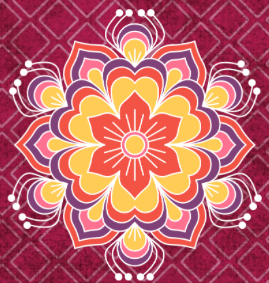
As Navaratri approaches, wanted to talk about the significance of something as simple, yet beautiful, as a kolam. 🌸
While kolam is commonly known as a traditional South Indian floor art, it carries a deeper philosophy that extends far beyond the patterns we draw. It is a beautiful reminder that even the simplest everyday practices can hold profound meaning.
1. Life is beautiful if we choose for it to be. Let’s draw happiness!
A kolam begins with something as simple as a dot, a line or a curve, gradually coming together to create something beautiful. Perhaps life is much the same. We may not always control the circumstances we begin with, but we can choose how we connect the dots, embrace the imperfections and create beauty along the way.
2. Impermanence — Learning to appreciate the present
A kolam is temporary by nature. It may fade with the wind, be walked over or wash away with the rain. And yet, we draw it again. It reminds us that not everything beautiful is meant to last forever. Some things are meant to be experienced, cherished and released. The beauty lies not just in what remains, but in the joy of creating it.
3. Unity and interconnectedness — Every dot matters
In a kolam, every dot has a purpose, every line connects, and every pattern contributes to the whole. A single line may seem insignificant on its own, but together, the lines create something meaningful. Much like our lives, our relationships and our place in the larger universe, we are all interconnected in ways we may not always see.
4. Harmony and balance — Finding our centre
The symmetry and rhythm of a kolam invite us to find balance. As we work through its patterns, we learn to slow down, pay attention and bring order to what might initially seem complex. It is a gentle reminder to seek harmony between our responsibilities and personal well-being, our inner world and outer lives.
5. Devotion and gratitude — An everyday act of spirituality
Traditionally, kolam is drawn at the entrance of homes as a gesture of welcome, auspiciousness and reverence. Made with rice flour, it can also serve as an offering to small creatures, reflecting a sense of generosity and coexistence with nature. Drawing a kolam can become a quiet act of devotion, an expression of gratitude for another day and a way of connecting with the divine through an ordinary daily ritual.
6. The joy of doodling — Keeping the mind alive
Here is something beautiful to think about: kolam is also a form of doodling! When we draw, explore patterns and repeat movements, we give our minds a chance to engage creatively without the pressure of producing something perfect. Drawing can encourage focus, support relaxation and keep our creative thinking flowing. Much like doodling in a notebook, creating a kolam invites us to be present, experiment with patterns and enjoy the process rather than fixate on the outcome.
Perhaps that is another lesson kolam teaches us: not every beautiful thing needs a purpose beyond the joy of creating it.
As we welcome the Goddess into our homes, let’s encourage our children, family and friends to learn about the significance of kolam, pick up the rice flour or kolam powder, and create something beautiful together. Let’s keep the tradition alive, not just through the patterns we draw, but through the meaning we pass on.
And remember, your kolam doesn’t have to be perfect. It just has to be yours.
Sorry, there were no replies found.